

Unsung Conservationists

The role beef farmers and ranchers play in preserving biodiversity takes the spotlight at Ontario conservation symposium
The connection between beef cattle and conservation took centre stage at a conference where agriculture topics are seldom part of the program. The Latornell Conservation Symposium is an annual event where environment and conservation leaders, practitioners and advocates gather to learn and network.

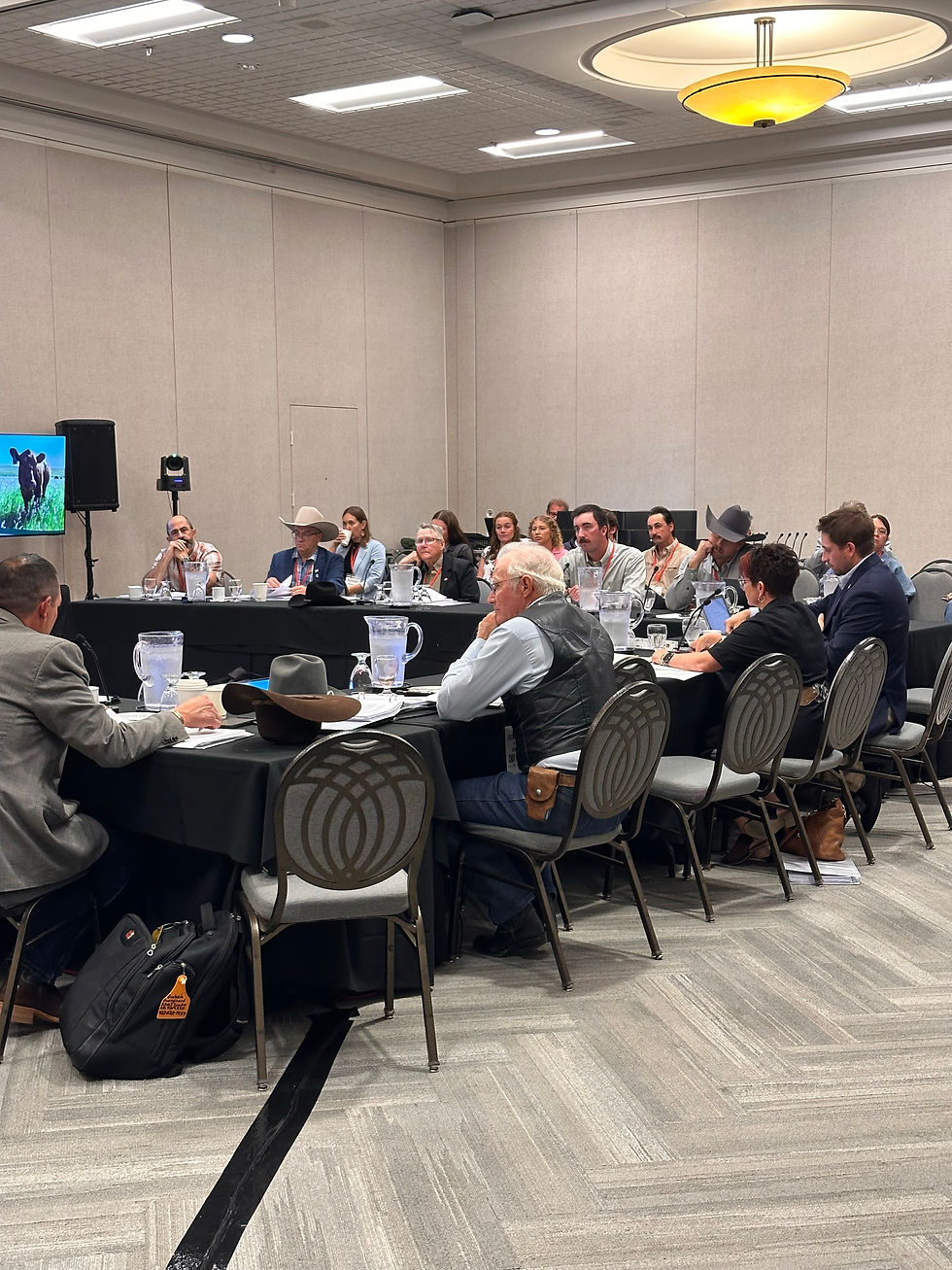
A session at the two-day event hosted in Woodbridge, Ontario, gave attendees the opportunity to watch the short documentary “Homes on the Range.” The film, which highlights the role beef cattle farmers and ranchers play in preserving critical wildlife habitat on Canada’s grazing lands, was followed by an expert panel discussion on the same topic.
Homes on the Range set the stage for the audience by demonstrating the variability that can be seen in beef farms and ranches across the country, the diverse and passionate people serving as caretakers of the land, and the vast array of wildlife that share the landscape with grazing cattle in all cases. The panel that followed provided further perspectives on cattle and conservation and included panelists Sandra Vos, a beef producer from Brant County in Ontario; Carolyn Callaghan, Senior Wildlife Biologist at the Canadian Wildlife Federation and a key personality in the film; and Andrew Campomizzi, Research Scientist at Bird Ecology and Conservation Ontario (BECO). The panel was moderated by Jennifer Kyle from Beef Farmers of Ontario.
Working at a national level, Callaghan shared that regardless of the province, the more extensive the type of farming (like grazed lands and perennial hay fields), the higher the biodiversity that is found. “As a society we need to recognize that producers that sustain this type of farming are providing a public service,” she stressed.
Carolyn goes on to state in the film, “we’re learning from each other—beef farmers might grow new eyes for a bird species and where it nests when I point it out on their farm. I grew new eyes about farming—the more I learn about the practices and constraints to beef producers, the more I’m aware of how together we can find solutions that are going to work for everyone.”
Vos offered a firsthand perspective on what stewardship looks like at the ground level. She described how she uses rotational grazing, buffer zones, and fenced-off waterways to promote healthier pastures and richer wildlife habitat. “It’s about balance,” she said, “I have seen how specific management decisions have benefited my cattle, pastures and brought in biodiversity, all at the same time—that’s how I know I’m doing the right thing.”
Andrew complemented Sandra’s comments with examples of specific bird species, including species at risk, that benefit from such management changes. Some of BECO’s research has been conducted at the Grey-Dufferin community pasture, which also practices rotational grazing. BECO has quantified how rotationally grazing beef cattle can support Bobolink breeding success, for example, by grazing areas with known nesting birds later in the season—a practice now used by the pasture manager in some fields.
“We’ve seen real conservation wins when we work directly with farmers,” Andrew noted, pointing to partnerships that have improved nesting success for grassland birds. “These producers are stewarding lands and vital bird habitats that might otherwise be lost if they weren’t being used for grazing cattle.”
Audience members, many of whom came from conservation authorities and environmental organizations, were surprised and enthusiastic about what they learned. The conversation quickly turned toward the potential for deeper collaboration among beef producers, conservation groups, and local authorities to advance shared goals. An example provided that demonstrates this type of cross-sector collaboration is the recent agreement to establish a new community pasture in Lambton County. The partnership between the local cattlemen’s association and the St. Clair Region Conservation Authority will provide young beef farmers access to grazing land, providing revenue for the conservation authority and stability for the land and its ecosystems.
After the screening and panel, Sandra and Jennifer had several people approach them to say that the session was a highlight of the day. People appreciated the real-life stories of producers in the film and panel, and the expertise of the scientists working in the space.
Attendees remarked that the film and panel helped reframe their view of beef production—not as separate from conservation, but as an essential partner in it. Or in Carolyn’s words, attendees “grew new eyes about beef farming.”
To watch Homes on the Range, visit @raisingcdnbeef on YouTube.

Comments